
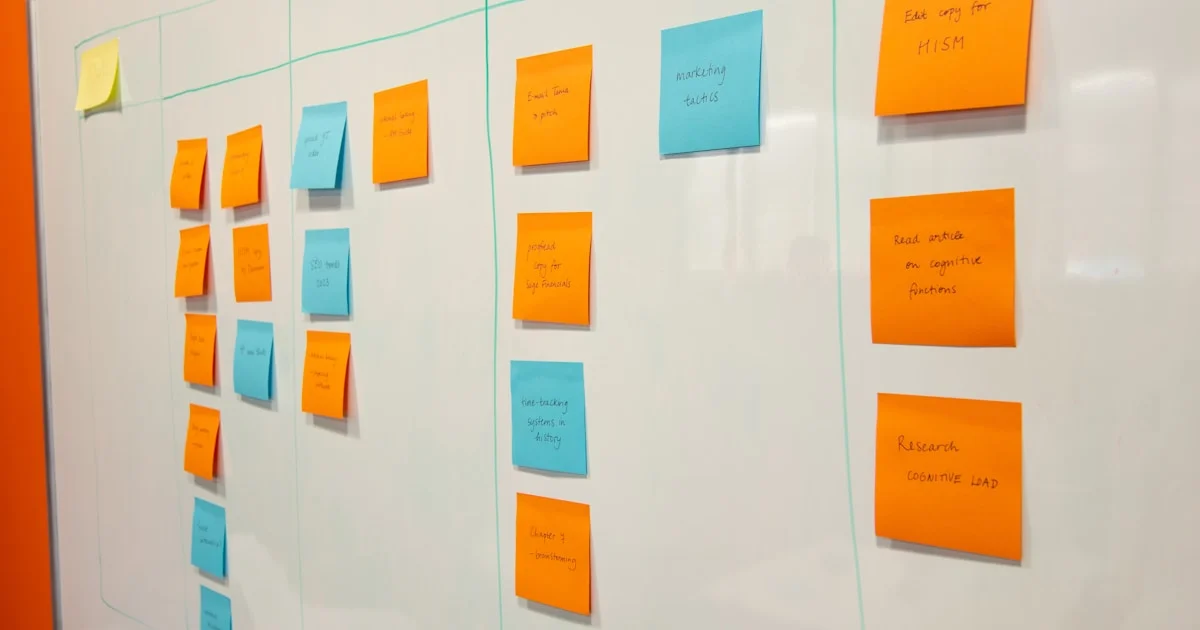
From AI Pilot to Production Agent: The 90-Day Plan for SMEs in 2026
Almost every mid-market CEO we speak to in 2026 has seen an AI pilot. The honest question is no longer "What can AI do?" but: Why has our pilot been stuck in demo mode for six months? Across more than two dozen SME projects we've distilled a plan that changes exactly that: 90 days, three clear phases, one production agent at the end. This article walks through what happens week by week, the most common mistakes – and how you produce measurable ROI instead of yet another slide for the next board meeting.
Why 70 % of AI pilots die in demo mode in 2026
The sobering number hidden behind most conference stages: roughly two out of three AI pilots in mid-sized businesses never reach production. Not because the model isn't smart enough – ChatGPT 5.5, Claude Opus 4.7 or Gemini Pro deliver more than enough quality for 90 % of SME use cases. They fail on very practical, organizational issues:
- No measurable baseline: Nobody knows how long the manual process actually takes today. Without that number, no ROI can be proven later.
- Demo data instead of production data: The pilot ran on 20 cleanly curated examples. The real inbox looks nothing like that.
- No owner, no on-call: Once the agent is supposed to enter the daily workflow, nobody is responsible for it when something goes wrong.
- Missing EU AI Act and GDPR documentation: Privacy and compliance only show up at the last minute – and block the rollout for months.
- No integration: The agent sits isolated in a web UI instead of talking to the CRM, mail or ERP.
The 90-day plan addresses exactly these five points. It's not a glossy framework but a pragmatic order of operations we've tested, corrected and applied again in customer projects.
The precondition: a "good enough" pilot before Day 0
The plan doesn't start from zero. It assumes a working pilot – wobbly is fine. Concretely: there's a use case with clear business value (e.g. lead qualification, email triage, invoice review), a model has been chosen, and at least one successful end-to-end demo has been shown. If you're not there yet, start with our guide on putting AI agents on n8n to work in your business – it gets you exactly to that starting point.
Day 0 checklist
- A clearly scoped use case with an owner from the business side.
- A working demo running on real (but curated) data.
- Model selected – see ChatGPT 5.5 or Claude Opus 4.7 for the trade-offs.
- Leadership has approved the 90-day investment (time + budget).
Phase 1 (Day 0–30): Harden the pilot – turn the demo into reality
The first 30 days are unspectacular and decisive. The goal is not to add features, but to prepare the pilot for production conditions. Losing discipline here means building on sand.
| Week | Focus | Concrete outcome |
|---|---|---|
| Week 1 | Measure the baseline | Handling time, error rate, daily volume – documented in writing. |
| Week 2 | Wire to real data | The agent runs on the real inbox / CRM extract, not demo data. |
| Week 3 | Logs & error paths | Every agent step is logged, errors are caught and reported cleanly. |
| Week 4 | Define a stop-loss | A clear kill criterion: if KPI X isn't met by Day 60, we stop. |
The biggest lever in Phase 1 is the baseline. Without it, you can't prove the agent made a difference at the end – no matter how well it runs. A simple spreadsheet is enough: date, case, manual minutes needed, error yes/no. Three weeks of data collection is worth its weight in gold.
Phase 2 (Day 30–60): Integration and human-in-the-loop
Now the pilot leaves the island. It gets secure access to the two most important systems – usually CRM and mail, sometimes ERP or the knowledge portal. We recommend one MCP server per system: define it cleanly once, expose it to any MCP-capable model, with clear permissions and a complete audit log. If you need something simpler, n8n's native tools work just as well – the point is that the interfaces are documented and versioned.
What really matters in Phase 2
- Human-in-the-loop checkpoints: Identify one or two places where a human confirms – e.g. before an email is sent or a deal status is changed.
- Pilot users: Two or three people actively work with the agent for two weeks. Daily 15-minute standup, feedback collected in a structured way.
- Escalation path: What happens when the agent declines a task? Who picks it up, who decides?
- Safe rollback: You must be able to shut the agent down in under 5 minutes without losing anything important.
The most common mistake in this phase: teams try to artificially push the agent's resolution rate. That's understandable but wrong. 60 % reliably solved cases with a clear escalation path beat 95 % solved cases where 10 % are wrong. Trust in the agent comes from predictability, not from maximum throughput.
Phase 3 (Day 60–90): Compliance, ROI proof and scale-out
In the last phase the pilot officially becomes a production agent – and one that can be operated long-term. Three dimensions run in parallel:
1. Finalize compliance
Document the EU AI Act risk classification, update the GDPR processing register, sign the data processing agreement with the model vendor, store logs in a tamper-evident way. If you've prepared the inputs cleanly during Phase 1 and 2 (see above), this takes two days. If you've pushed it to the end, it costs weeks. Deeper read: our EU AI Act guide for SMEs.
2. Measure ROI against the baseline
Compare 10 real working days with the agent against the Phase 1 baseline. Rule of thumb: a production agent should deliver 30–50 % time savings, otherwise the running cost isn't justified. If you're below that, ask honestly: wrong use case, wrong model, wrong prompt – or does the process itself need to be redesigned first? More in our ROI use cases for SMEs.
3. Set up the scale-out
Which second use case is next? Which tools/MCP servers stay reusable? Who becomes the internal champion? A production agent without a roadmap to the next use case is a wasted opportunity – the team has the most energy and the most trust right now.
The 5 most expensive mistakes in the 90-day plan
- Skipping the baseline. Without before-numbers, after-ROI is a matter of belief.
- Pushing compliance to the end. Privacy and the EU AI Act need to run in parallel, not as a final stamp.
- Too many use cases at once. One production agent in 90 days beats three pilots stuck in limbo.
- No operational owner. An agent without on-call ownership gets switched off after the first incident and never comes back online.
- Ignoring the stop-loss. Some use cases just don't pay off with today's models. Acknowledging that honestly after 60 days isn't failure – it's discipline.
The 90-day plan at a glance
| Phase | Main goal | Success signal |
|---|---|---|
| Day 0–30 · Harden | Turn the demo into reality | Baseline numbers in writing, clean logs, stop-loss defined. |
| Day 30–60 · Integrate | Connect to the two most important systems | Pilot users work daily, human-in-the-loop checkpoints work. |
| Day 60–90 · Production | Compliance, ROI, scale-out | ≥ 30 % time savings proven, EU AI Act docs done, owner named. |
Conclusion
In 2026 the models are good enough. What's missing in mid-sized businesses isn't AI magic – it's a clear path from pilot to production. The 90-day plan is that path: measurable, compliance-ready, supportable inside your own organization. Walk it with discipline and you'll have a production AI agent, an honest ROI number, and – almost more importantly – a team that knows exactly how to build the second one.
Frequently asked questions
Why do so many AI pilots fail in mid-sized businesses?
Usually not because of the model, but because of everything around it: no success KPIs, no integration into CRM or mail, missing EU AI Act and GDPR documentation, no clear owner. The pilot stays a nice demo without actually relieving a real process.
Why 90 days instead of 12 months?
Ninety days is long enough to ship a single use case cleanly into production, and short enough to hold leadership budget and attention. Beyond three months, initiatives measurably lose momentum – this is what we see in most SME projects we've supported.
Which tools should we use during the 90 days?
n8n for orchestration (self-hosted or cloud), one MCP server per core system for data access, ChatGPT 5.5 or Claude Sonnet 4.6 as the model depending on the use case. More important than any specific tool is the architecture: model, orchestrator and data access cleanly separated.
How do you measure ROI in 90 days?
By collecting a baseline before Day 0: minutes per case, cases per day, error rate. In week 12 you compare the same process under production conditions. A production agent should deliver at least 30–50 % time savings, otherwise it isn't worth operating.
Do we need in-house AI expertise for this?
Helpful, but not required. What you really need is an internal process owner who understands the business case, plus someone for integrations (in-house or external). Specialist knowledge in prompting, model selection and the EU AI Act can be bought in via a partner – the 90-day plan is designed exactly for that setup.
Get your AI pilot into production in 90 days – with a clear plan
In a free intro call we'll look at your current pilot together, identify the most likely stop-loss risk, and show which 90-day step gives you the biggest lever – tooling recommendation and EU AI Act-ready documentation included.
Book a free intro callShare article:
Related Articles
MCP Servers for SMEs 2026: ChatGPT, Claude & n8n on Your Data
How SMEs connect models and tools through the Model Context Protocol in 2026 – architecture, use cases and a realistic 4-week plan.

EU AI Act in Practice: What SMEs Need to Do for Their Automations in 2026
Risk categories, documentation duties and a pragmatic compliance path for mid-sized automations.

Automation for SMEs: ROI Use Cases That Actually Pay Off
Which processes deliver measurable ROI fastest in mid-sized businesses – and what to watch for when picking them.