
Germany’s Right to Repair 2026: How SMEs Turn Requests Into a Reliable Service Workflow
Transparency note
This article was created automatically with AI. The linked sources were checked during creation on 14 August 2026; no substantive human editorial review took place before publication. The time calculation is an explicitly fictional scenario, not a customer case. This is process guidance, not legal advice.
Germany’s Act promoting the repair of goods entered into force on 23 July 2026. That does not create a clean service process by itself. If the defect photo, model number, diagnosis approval, quote and collection notice live in separate email threads, more demand initially means more coordination.
The practical response is not a large autonomous agent. It is a dependable chain: capture data once, check the case and business role, approve diagnosis costs in advance, offer repair terms transparently, communicate status automatically and keep completion documents together. AI can pre-structure free-text descriptions or images; binding prices, safety decisions and legal classifications remain with accountable people.
In brief
- The law is a trigger, not a workflow: Digital intake keeps service and required information out of fragmented inboxes.
- Start with role and product: A seller, manufacturer and independent repair business do not automatically have the same duties.
- Separate diagnosis from repair: Costs, consent and the repair order need recognisable decision points.
- Use one status per case: The customer and team see the same next step without parallel lists.
- Automation should create evidence: Quote, acceptance, changes and completion stay attached to the case with timestamps.
What the new framework changes – and what it does not
Germany’s implementing Act entered into force on 23 July 2026. In the relevant case, the new claim is directed at the manufacturer or the statutory chain of EU economic operators—not automatically at every independent workshop. It only applies to covered product groups and for the product-specific repairability period prescribed for them.
Seller remedies are a separate track. Where a defect is repaired as statutory cure by the seller, the original limitation period is extended once by twelve months. When the regular two-year period applies, that makes three years in total. This is not a general warranty for every paid repair; according to the official explanatory memorandum, the change applies to new purchase contracts from 31 July 2026.
The German Bundestag also records that the European Repair Information Form was incorporated into German law and may be provided voluntarily by repair businesses. “Voluntary” matters: the form is not a blanket obligation for every workshop.
Checkpoint before automation
For each product group and role, establish whether you act as seller, manufacturer, appointed service provider or independent repair business; which goods are covered; and whether the case concerns statutory liability, a commercial guarantee, a manufacturer repair claim or a normal paid repair. Put that classification into a professionally and legally reviewed rule, not a free-form AI decision.
The repair workflow in eight steps
- 1. Capture the request: Form, email or phone note becomes one case. Required fields are checked immediately; missing information triggers one consolidated follow-up.
- 2. Confirm role and case type: An accountable person checks the consumer case, product group, contracting party, repairability period and path: statutory seller cure, guarantee, manufacturer claim or paid repair.
- 3. Approve diagnosis: If a paid inspection is needed, its scope and cost are shown in advance and consent is stored durably.
- 4. Record diagnosis and parts: The technician captures the fault, proposed repair, parts, duration, transport and any temporary replacement in structured fields.
- 5. Generate the quote or form: Approved data fills the document and message. Prices and terms come from the business system; the AI does not invent them.
- 6. Accept the order: Acceptance, rejection or question receives a timestamp and version. A work order is created only after the required approval.
- 7. Route repairs and exceptions: Missing parts, changed effort or safety findings move into a human exception path; the customer receives the appropriate status.
- 8. Document completion: Test, handover, invoice, parts used and relevant date information are completed and stored against the same case.
This pattern can combine a form, helpdesk or CRM, document generation and an automation platform. If you still need to choose the first process, our digital workforce guide includes a practical selection matrix.
The field matrix for intake
Good intake does not ask for everything; it asks for everything necessary. Personal data should remain purpose-limited and follow your deletion policy.
| Field group | Why it is needed | Automatable step |
|---|---|---|
| Contact & channel | Questions and updates | Confirmation and case number |
| Goods, model, serial number | Unambiguous assignment | Pre-fill product and parts data |
| Purchase and contract data | Professional case review | Extract evidence and present a decision |
| Fault, error code, images | Prepare diagnosis | Structure the description, never make the final diagnosis |
| Location, handover, transport | Logistics and costs | Offer options and dates |
| Diagnosis cost | Consent before service | Store approval with a timestamp |
| Requested outcome | Repair, query or spending cap | Start the appropriate handling path |
A status model without follow-up chaos
Use a small set of states with a clear owner. Every transition needs a trigger, next action and deadline.
Automated messages suit receipt, consolidated questions, the quote, a confirmed delay and collection readiness. New damage, higher costs, safety risks or a changed repair require professional review and, where needed, renewed consent.
Use the European Repair Information Form as a data model
Article 4 and Annex I of Directive (EU) 2024/1799 provide a useful structure: repairer identity and contact details, goods, nature of the defect and proposed repair, price or calculation method and maximum price, duration, possible temporary replacement, handover location, ancillary services and costs, validity period and any additional information.
Where a repairer voluntarily provides the form, it must be supplied free of charge on a durable medium. The complete form is a binding contractual offer; the repairer generally remains bound for at least 30 calendar days after the consumer receives it. That period is not a deadline for completing the repair. If diagnosis is required to determine the defect, repair and cost, it may be charged separately—but the consumer must be informed before diagnosis and before the form is supplied. Documented consent is a robust workflow step.
Technical consequence
Store the form fields as structured case data. The PDF then becomes an output, not the only source of truth. Price version, validity, acceptance and later completion remain connected.
Fictional time calculation: administration only
This model is explicitly illustrative and not a customer case. Measure these variables in your own business:
Time saved = volume × (manual admin time − new review time) − exception and operating effort
- 60 requests per week × 8 minutes of current capture and follow-up = 480 minutes
- 60 structured cases × 2 minutes of human review = 120 minutes
- Fictional weekly exception and maintenance effort = 60 minutes
- Calculated capacity difference = 480 − 120 − 60 = 300 minutes, or 5 hours per week
Diagnosis, repair, setup, software, training and error costs are not included. The model only shows how to test administrative time transparently. Start with real timestamps for receipt, complete data, quote and acceptance.
Move from inbox to controlled flow in 30 days
Week 1: Process and rules
Choose one product group; review roles; define fields, statuses, owners and the exception path.
Week 2: Intake and documents
Connect the form, inbox, case, diagnosis approval, quote template and durable storage.
Week 3: Pilot with real data
Handle limited volume, record missing fields and questions, and do not automate risky decisions.
Week 4: Approval and measurement
Complete legal and professional review, compare times, improve messages and only then add categories.
Sources and photo credit
Checked on 14 August 2026.
- Federal Law Gazette 2026 I No. 212 – official Act and entry into force of Germany’s implementation.
- Bundestag document 21/5923 – official explanatory memorandum, scope and transitional rules.
- German Federal Government: Reparieren statt wegwerfen – plain-language summary of the new framework.
- German Bundestag: implementation of the Right to Repair Directive – legislative process, resolution and voluntary information form.
- EUR-Lex: Directive (EU) 2024/1799 – Article 4 and Annex I with the European Repair Information Form fields and framework.
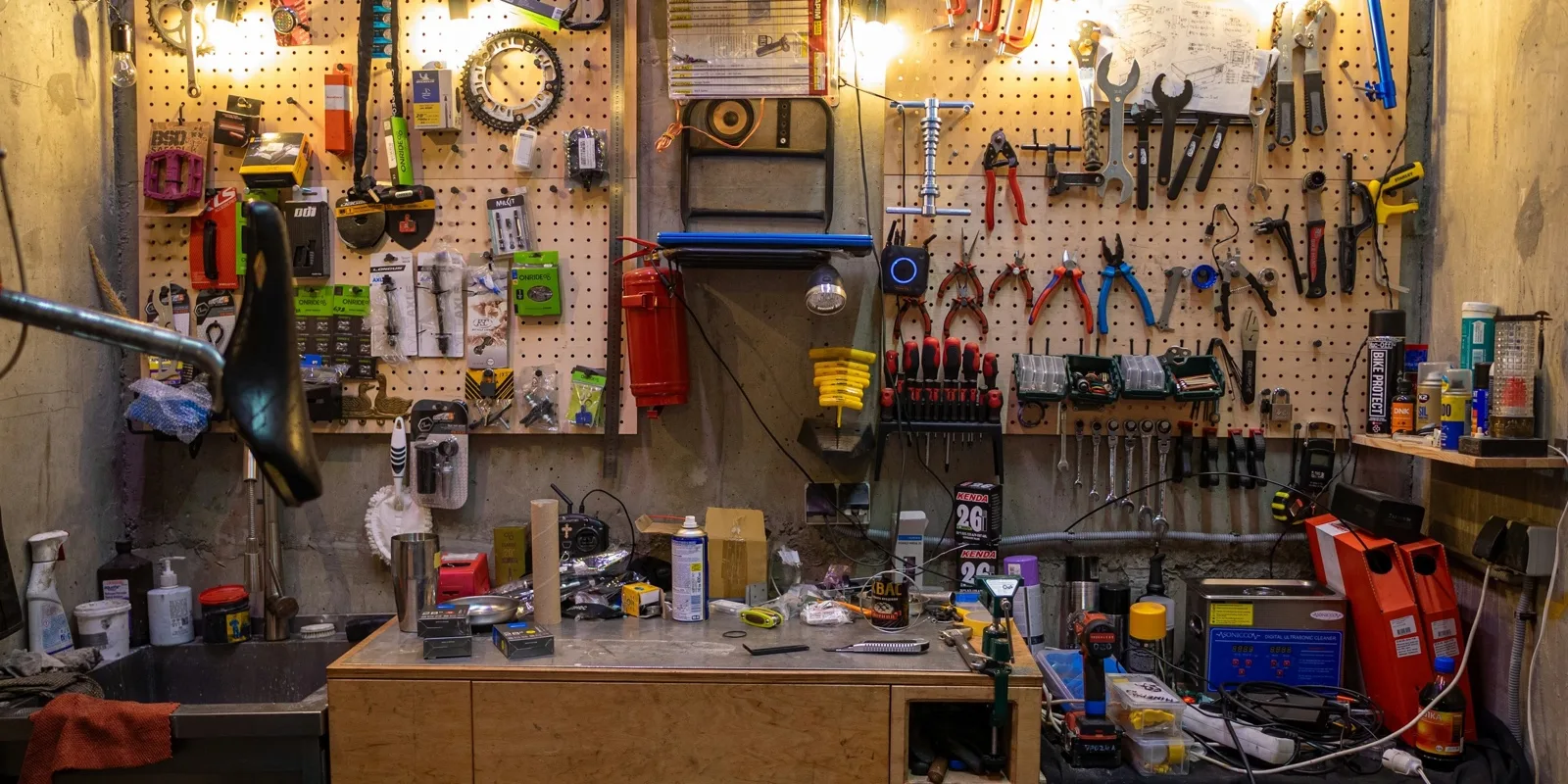
- Photo: camera obscura on Unsplash, Unsplash License; commercial use and editing permitted. The source page identifies an Olympus E-M1 and shows a real workshop without recognisable people.
Repair requests should trigger work, not a search exercise.
Lyron connects intake, professional checks, approvals, documents and status messages into a maintainable service workflow. We start with one product group and a clear exception path.
Book a free workflow checkShare this article: